
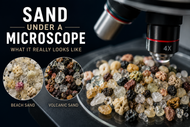
Sand Under a Microscope: What It Really Looks Like
Jul 17th 2026
Most of us walk across sand without giving it a second thought. Whether it's on a beach, a hiking trail, or a playground, sand looks like millions of tiny grains blended together.
Place those same grains under a microscope, however, and an entirely different world appears. Instead of plain specks, you'll discover colorful crystals, tiny shell fragments, volcanic rock, and minerals that have been shaped by nature over thousands or even millions of years.
Every grain has its own story, and no two are exactly alike. Whether you're a geology enthusiast, a teacher, a student, or simply curious about the natural world, examining sand under a microscope is an easy and fascinating way to see our planet from a completely new perspective.
Did You Know? A single handful of sand can contain thousands of individual grains, each with its own unique shape, color, and mineral composition.
What Does Sand Look Like Under a Microscope?
Looking at sand under a microscope is like exploring a miniature landscape.
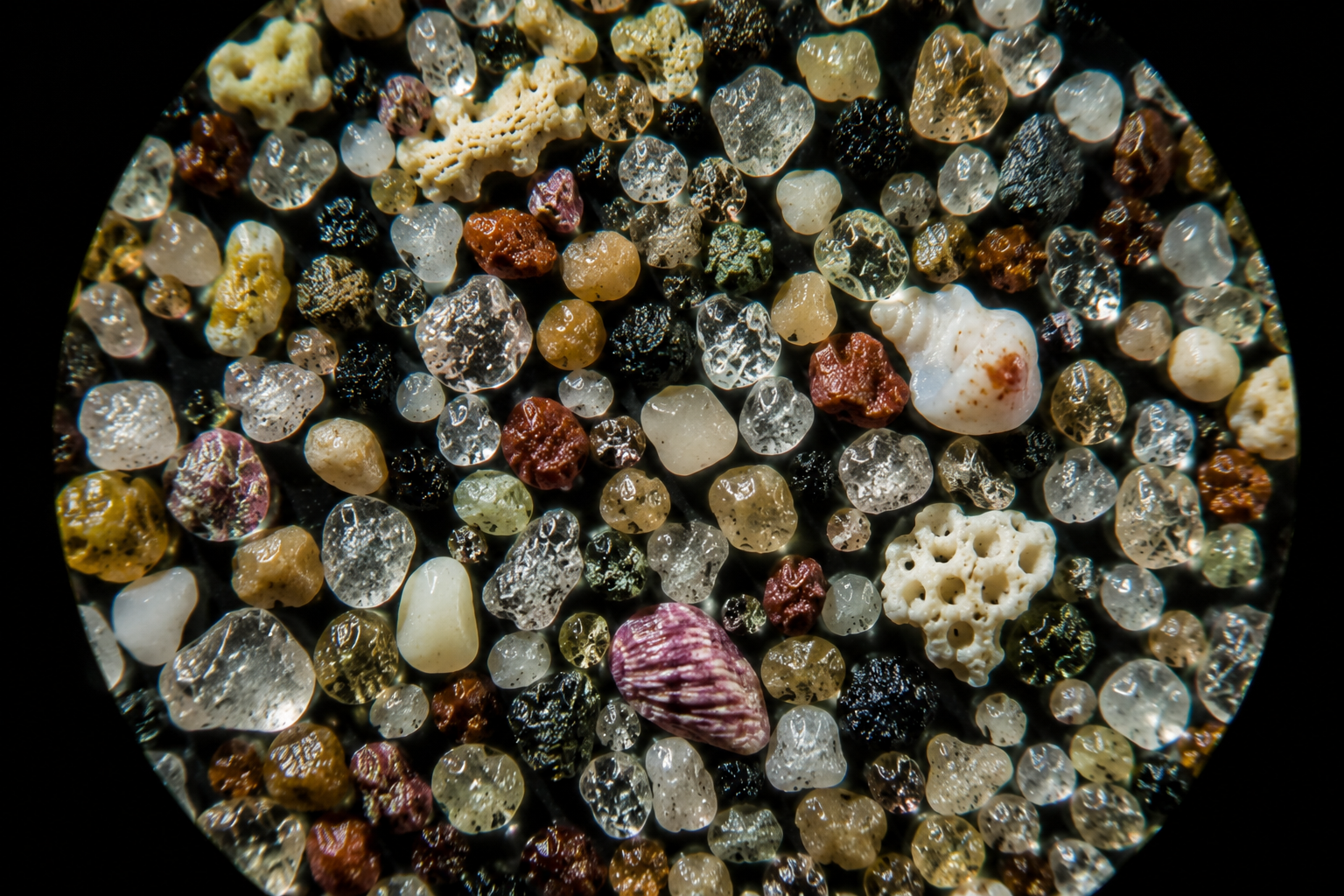
Instead of seeing tiny tan or white dots, you'll notice grains that are transparent, colorful, rough, smooth, or even sparkling. Some resemble tiny gemstones, while others look like broken pieces of glass or shells.
Depending on where the sand was collected, you may notice differences in:
- Color
- Shape
- Size
- Texture
- Mineral composition
Some grains have sharp, jagged edges, showing they were recently broken from larger rocks. Others are smooth and rounded after spending years being tumbled by waves or blown across the desert by wind.
One of the biggest surprises for first-time viewers is how colorful sand can actually be when viewed up close.
Why Every Grain of Sand Is Different
Sand begins as larger rocks that slowly break apart through weathering and erosion. Over time, rivers, glaciers, ocean waves, and wind carry those fragments across the landscape.
As the grains travel, they collide with other rocks and sand particles, gradually changing their shape.
The environment where the sand forms has a huge impact on how it looks under a microscope. Ocean waves tend to smooth and polish grains, while wind creates a frosted appearance as grains repeatedly bump into one another.
The minerals found in the original rock also determine the color and appearance of the finished sand. Quartz is one of the most common minerals, but many beaches and deserts contain feldspar, volcanic minerals, coral fragments, shells, and even tiny fossils.
That's why sand collected from two different beaches can look completely different under magnification.
Beach Sand Under a Microscope
Beach sand is often the most colorful and diverse type of sand to examine.
A single sample may contain:
- Quartz crystals
- Shell fragments
- Coral pieces
- Feldspar
- Tiny marine organisms
- Dark volcanic minerals
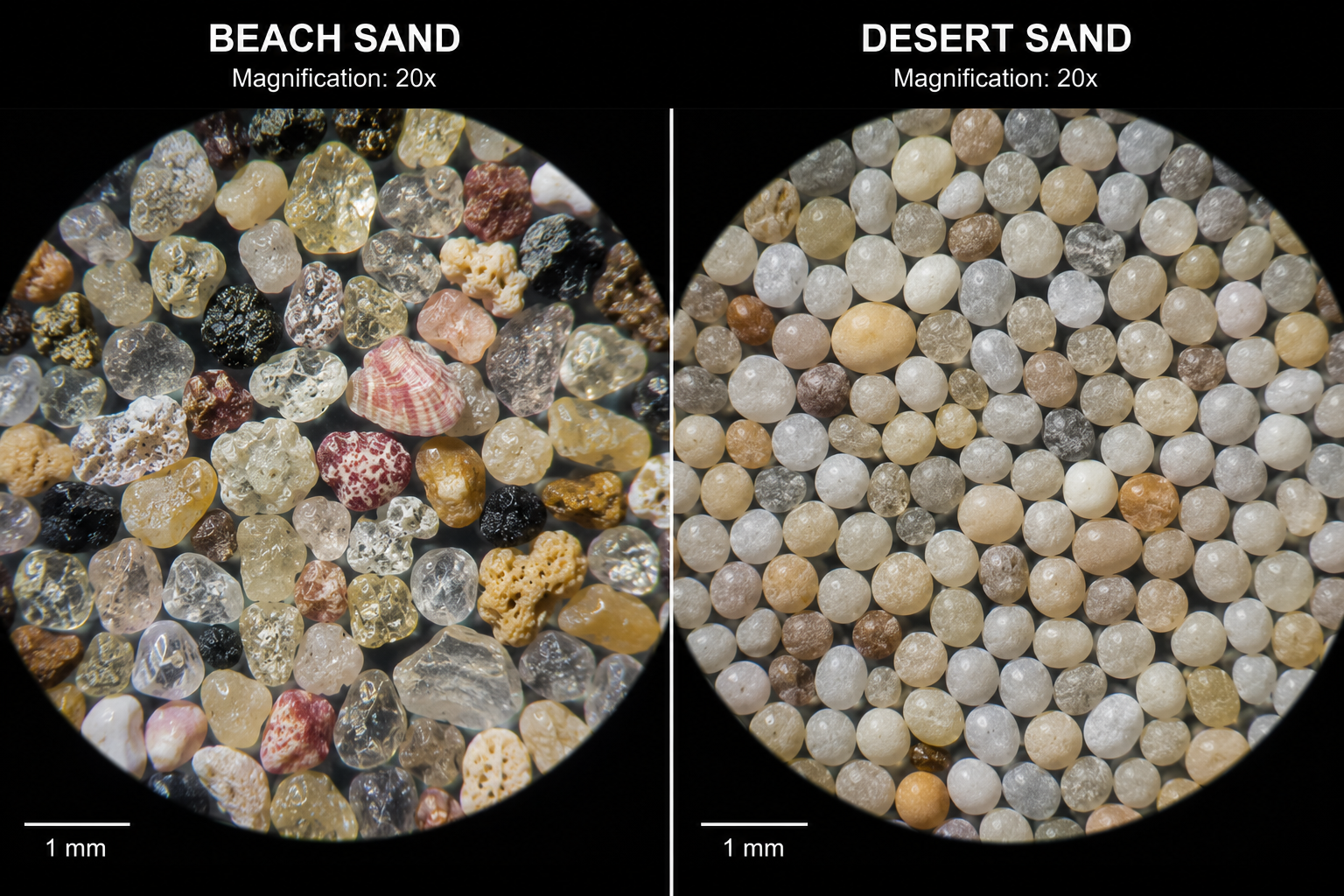
Because ocean waves constantly roll the grains against one another, beach sand usually has smoother edges than sand found in other environments.
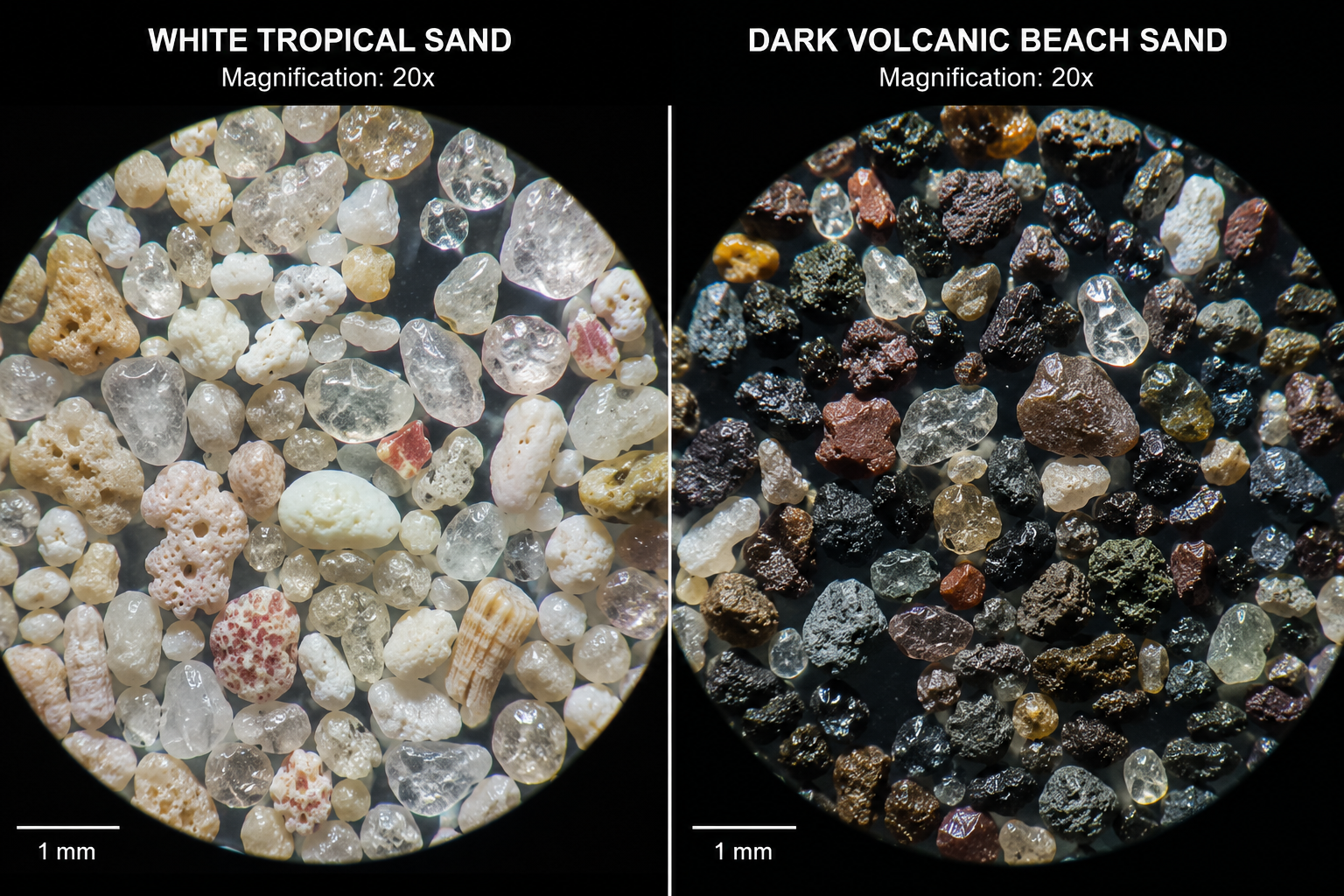
The location also makes a difference. Tropical beaches often contain more coral and shell fragments, giving the sand a lighter appearance. Beaches near volcanic regions may contain black basalt or other dark minerals, while many inland beaches are made mostly of quartz.
Collecting small samples from different beaches can make for a fun comparison under the microscope. Even beaches only a few miles apart may have noticeably different grain sizes, colors, and mineral compositions.
Desert Sand Under a Microscope
At first glance, desert sand may not look very different from beach sand. Under a microscope, however, the differences become much more noticeable.
Unlike beach sand, which is shaped by moving water, desert sand is formed primarily by wind.
Many desert grains appear:
- More uniform in size
- Smooth and rounded
- Frosted or matte in appearance
- Mostly made of quartz
The constant movement of blowing sand acts almost like natural sandpaper, slowly polishing the grains over time.
One interesting fact is that desert sand isn't always the best choice for construction. Because many grains become so smooth and rounded, they don't lock together as well as the more angular grains found in river sand.
Surprising Things You Might Find in Sand
Not every grain of sand is actually made from rock.
Depending on where you collect your sample, you might discover:
- Tiny shell fragments
- Pieces of coral
- Microscopic fossils
- Volcanic glass
- Garnet crystals
- Magnetite
- Sea urchin fragments
- Small plant material
Some beaches are even famous for unusual sand colors. Hawaii, for example, is home to white, black, green, and red sand beaches, each created by different minerals or volcanic activity.
One of the most enjoyable parts of studying sand is that every sample is different. You never know exactly what you'll discover until you take a closer look.
Best Microscope for Viewing Sand
One of the best things about viewing sand is that it requires very little preparation.
Simply place a few grains on a microscope stage or viewing plate and begin observing at low magnification.
A stereo microscope is an excellent choice because it provides a three-dimensional view of each grain, making it easy to appreciate its texture and shape. The larger working distance also allows you to examine loose samples without preparing a microscope slide.
A digital microscope is another great option, especially for classrooms or anyone who wants to capture images and videos to share with others.
For most samples, a magnification range of 10x to 40x provides an excellent view. Increasing the magnification can reveal even finer details, but many of the most interesting features are visible at lower power.
A Tiny World Worth Exploring
Sand may seem ordinary, but under a microscope it reveals an incredible world hidden beneath our feet.
Every grain tells a story about where it came from and the natural forces that shaped it over time. Whether you're comparing sand from different beaches, examining a sample from the desert, or simply looking at the sand in your own backyard, you'll quickly discover that no two grains are exactly alike.
The next time you're outside, collect a small sample and take a closer look. You might be surprised by just how much beauty and variety can be found in something so ordinary.
Frequently Asked Questions About Sand Under a Microscope
What does sand look like under a microscope?
Sand appears as individual grains with unique shapes, colors, and textures. Depending on where it was collected, you may see quartz crystals, shell fragments, coral pieces, volcanic minerals, and other natural materials.
Why does beach sand look different from desert sand?
Beach sand is shaped by ocean waves, which tend to create smoother, rounded grains. Desert sand is shaped by wind, often producing frosted surfaces and grains that are more uniform in size.
What magnification is best for viewing sand?
Most sand samples are best viewed between 10x and 40x. This range provides enough magnification to see individual grains while maintaining a wide field of view.
What type of microscope works best for viewing sand?
A stereo microscope is typically the best choice because it provides a three-dimensional view and allows you to observe loose sand without preparing a slide. Digital microscopes are also excellent for capturing photos and videos.
Is all sand made from quartz?
No. While quartz is one of the most common minerals found in sand, many samples also contain feldspar, volcanic rock, coral, shell fragments, garnet, magnetite, and even microscopic fossils, depending on where the sand originated.


