
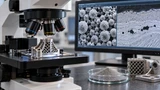
How Microscopy Supports Additive Manufacturing Quality Control: Powder, Layering, and Defect Analysis
Oct 12th 2026
Additive manufacturing (AM), commonly known as 3D printing, has transformed how manufacturers produce complex components. From aerospace and automotive applications to medical devices and precision engineering, additive manufacturing allows companies to create intricate parts that would be difficult or impossible to produce using traditional manufacturing methods.
However, producing a part is only
…

What Does Snow Look Like Under a Microscope?
Oct 1st 2026
Snow may look like a soft, white powder from a distance, but snow under a microscope looks very different. Magnification reveals that snow is made up of individual ice crystals and snowflakes with geometric shapes, sharp edges, branching arms and intricate patterns.
Fresh snow can contain everything from classic six-branched snowflakes to simple hexagonal plates, columns, needles and irregular i
…
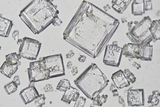
Salt Under a Microscope: What Salt Crystals Really Look Like
Sep 21st 2026
Salt may look like nothing more than tiny white grains when sprinkled onto food, but put those same grains under a microscope and they become surprisingly geometric.
Under a microscope, table salt appears as transparent or translucent cube-shaped crystals with flat faces, straight edges and right-angle corners. Some grains form nearly perfect cubes, while others appear broken, stacked or irregul
…

Parts of a Compound Microscope: Labeled Diagram, Functions & Guide
Sep 16th 2026
A compound microscope uses a combination of lenses, illumination components and mechanical controls to produce a magnified view of specimens that are too small to see clearly with the naked eye. While designs vary between models, most compound microscopes share the same essential parts.
The main parts of a compound microscope include the eyepiece, objective lenses, revolving nosepiece, stage, cond
…


